Challenge Setup
Tools Used:
- Nmap — Port scanning & service enumeration
- Gobuster — Directory enumeration
- ssh2john / John the Ripper — Converting and cracking the RSA private key passphrase
- SSH — Remote access using the cracked key
- GhostGate — Custom HTTP server tool, used to stage LinPEAS for enumeration
- LinPEAS — Automated privilege escalation enumeration
- cat /etc/cron.d/ — Listing scheduled cron jobs
- /etc/hosts — Redirecting a hostname to my attacking machine
- Reverse shell payload — Delivered via the hijacked cron job
Environment:
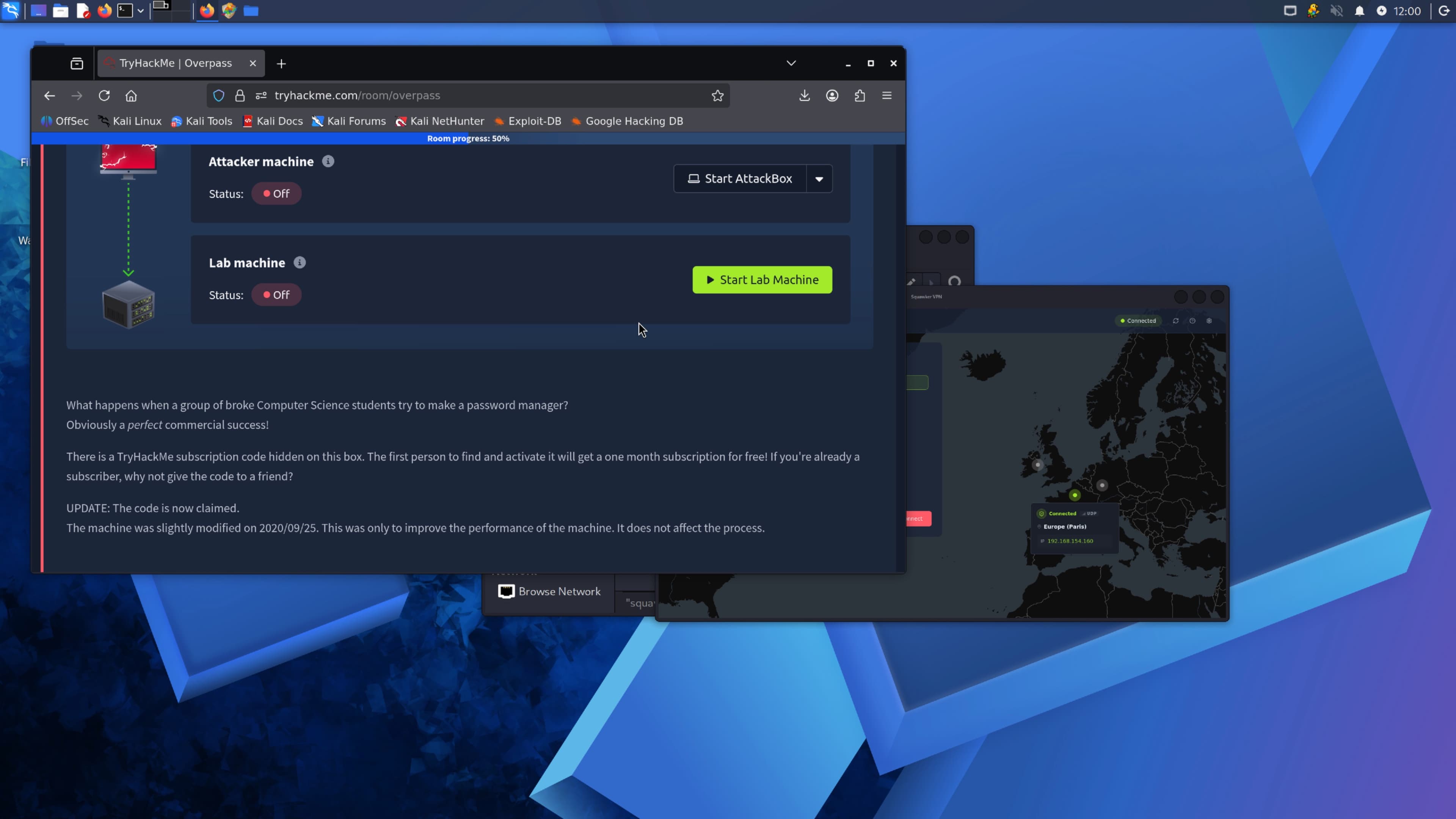
- TryHackMe hosted target machine
- Kali Linux (attacker machine)
Disclaimer: Only perform tests on machines you have permission to.
Initial Recon
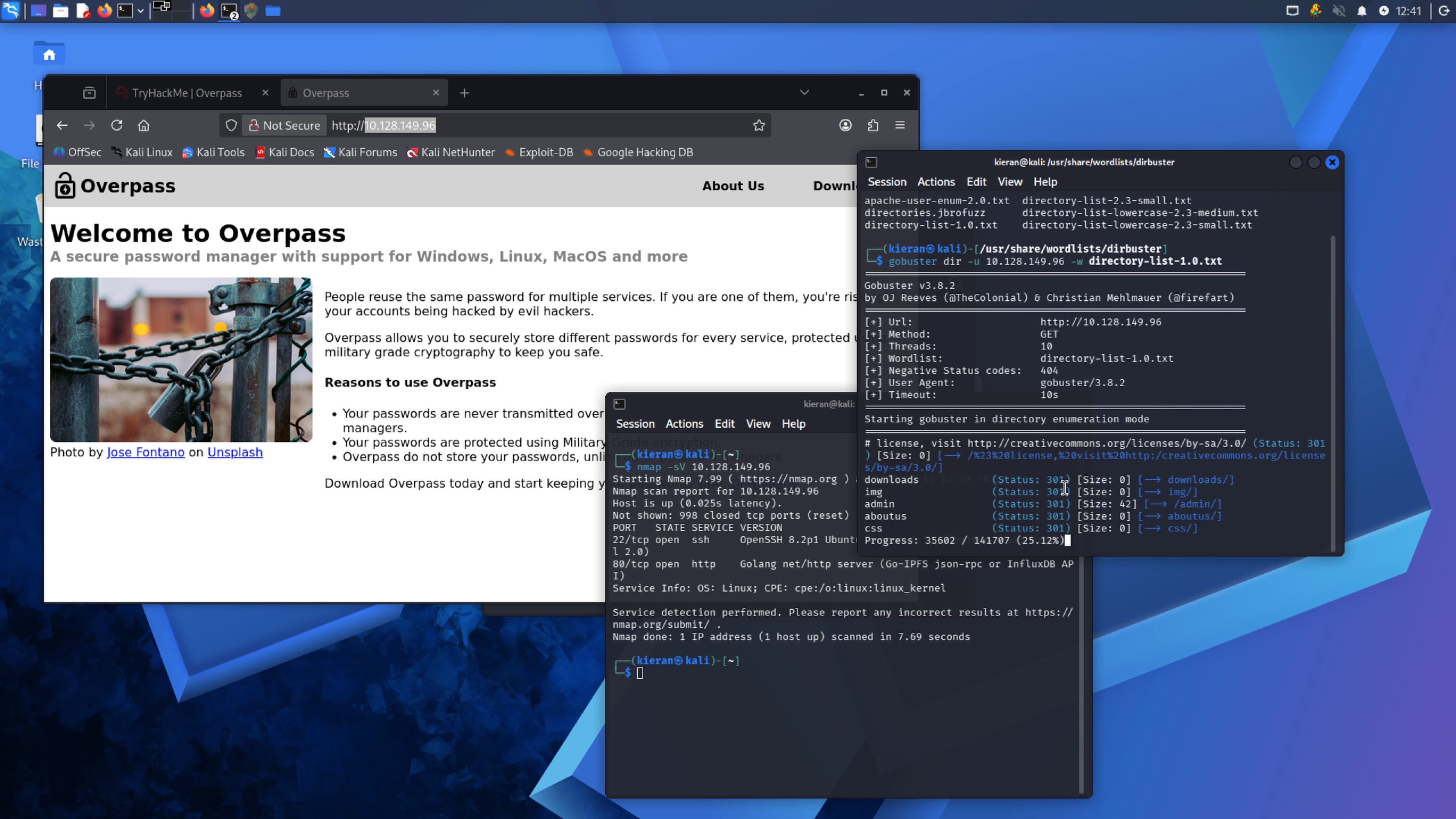
My first step in any ethical hacking challenge is to scan with Nmap. This helps me identify running services.
nmap -sV -p- <target-ip>
Only two services were open: HTTP and SSH.
Exploitation / Solution
1. Enumerating the Web Server
If an HTTP server is active, I open it in a new tab to inspect its content and code. Then I use Gobuster to uncover hidden pages like admin panels and secret logins.
gobuster dir -u http://<target-ip> -w /usr/share/wordlists/dirbuster/directory-list-2.3-medium.txt
This turned up a couple of extra pages beyond the main site, including a login form worth a closer look.
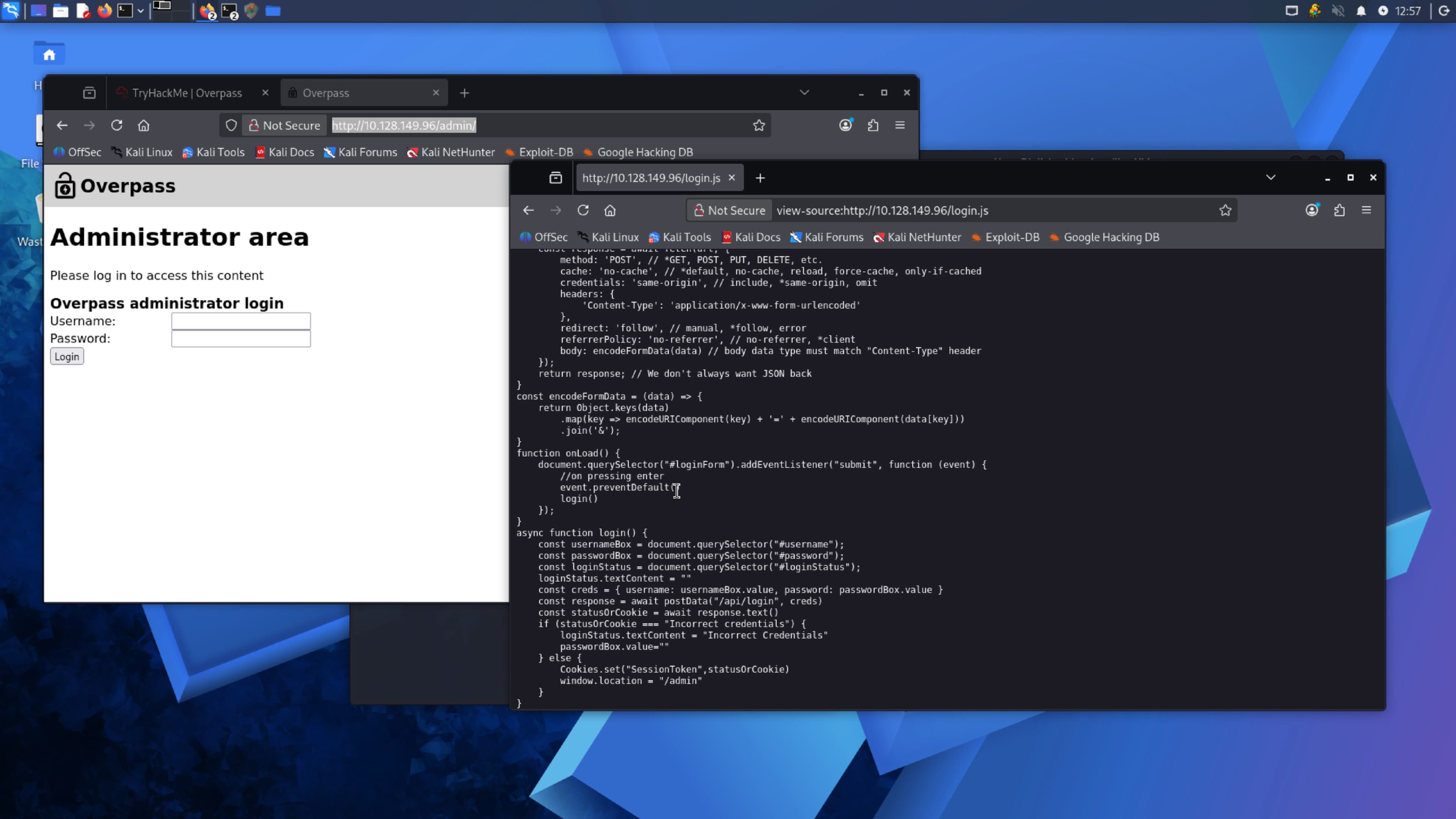
2. Spotting a Logic Flaw in the Login
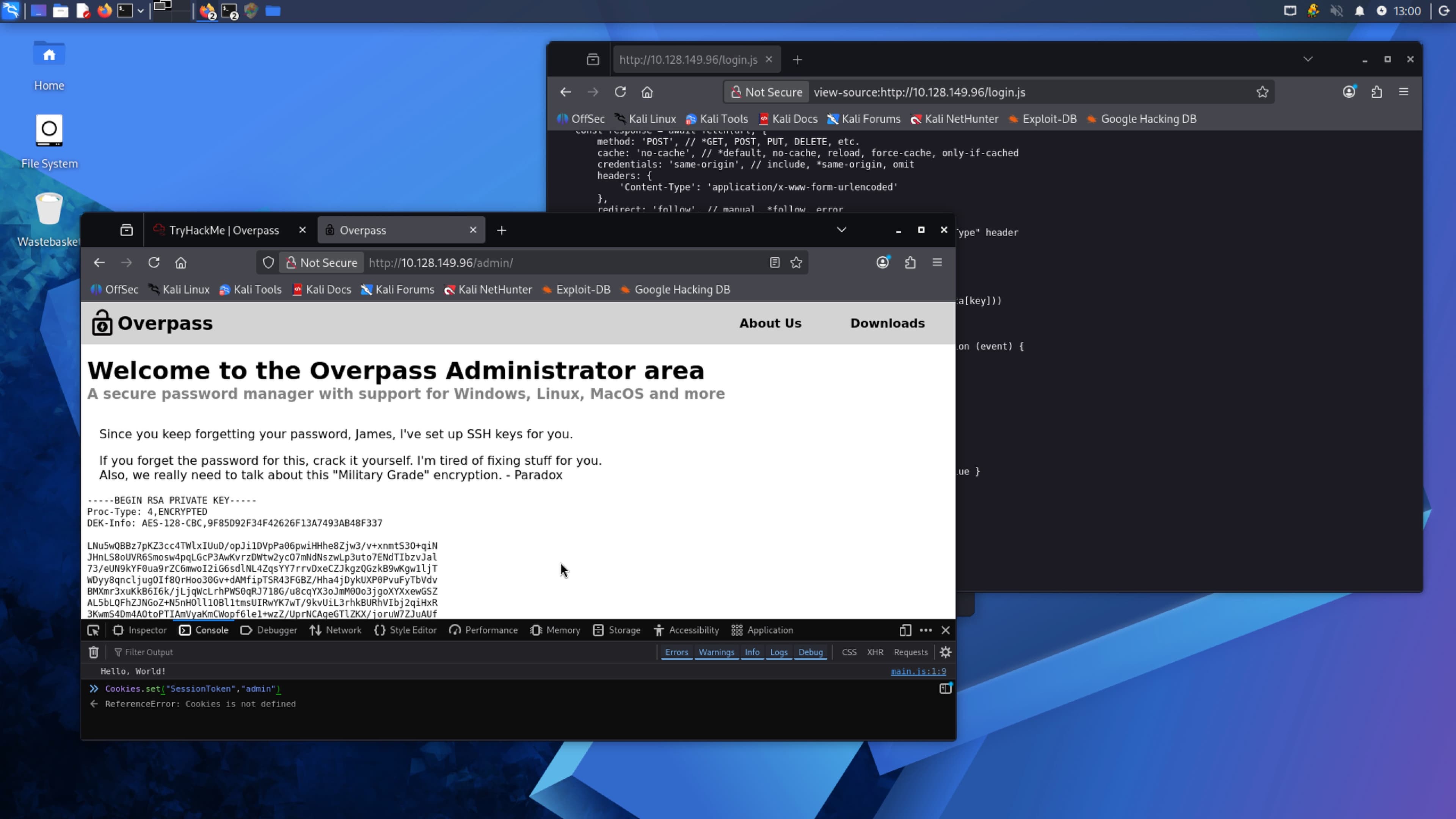
Before focusing on a vulnerability, I inspect the website's code for any logical flaws or unclean inputs that can be exploited. In this case, the login function set a session cookie as a fallback path if the main authentication check failed — meaning a failed login attempt could still leave the browser holding a valid session cookie. I set this cookie manually using the logic visible in the page's code to force myself into an authenticated session.
3. Reaching the Admin Area
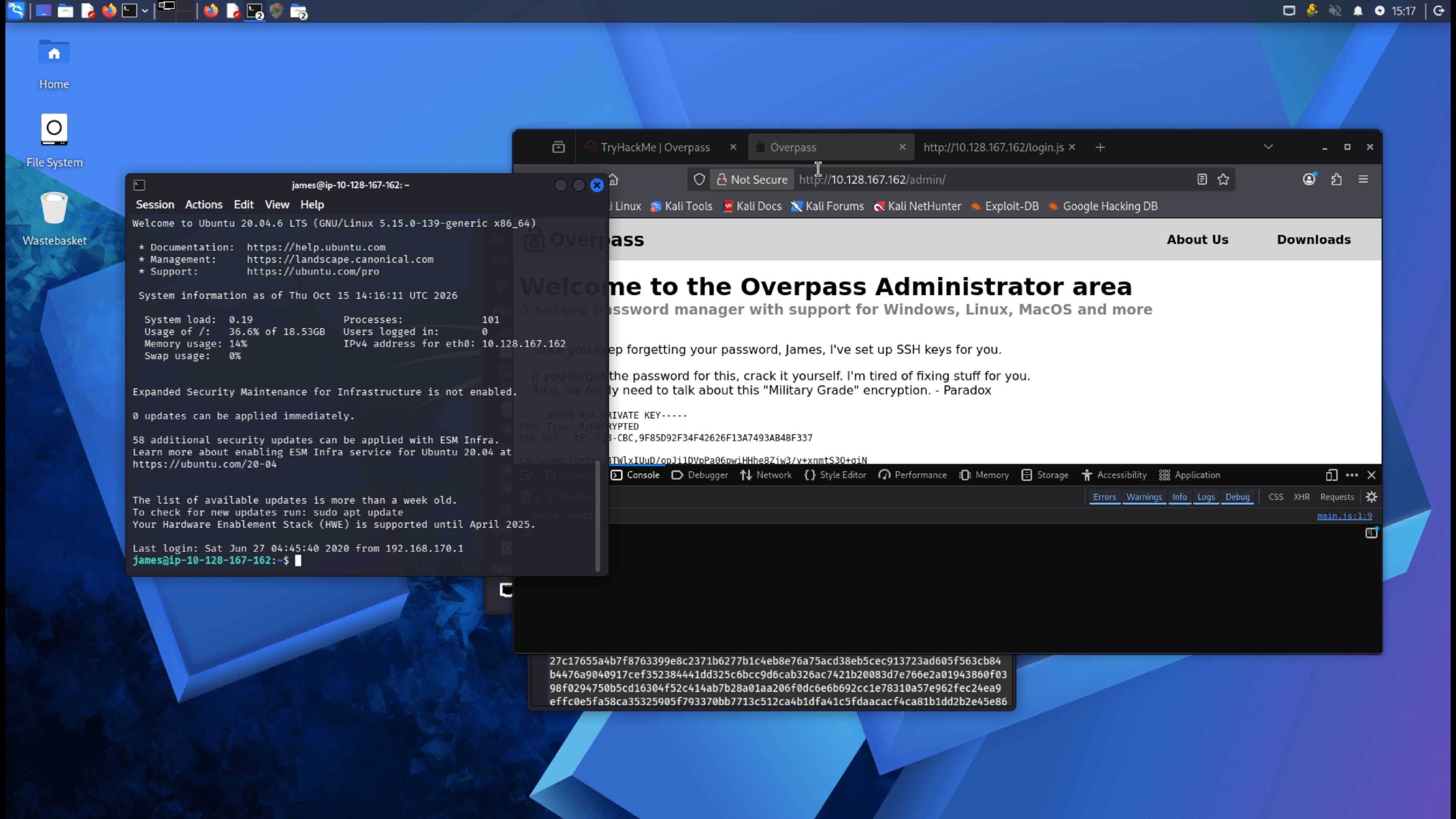
Using that logic bug, I gained access to the admin area, which contained an RSA private key.
4. Cracking the Private Key Passphrase
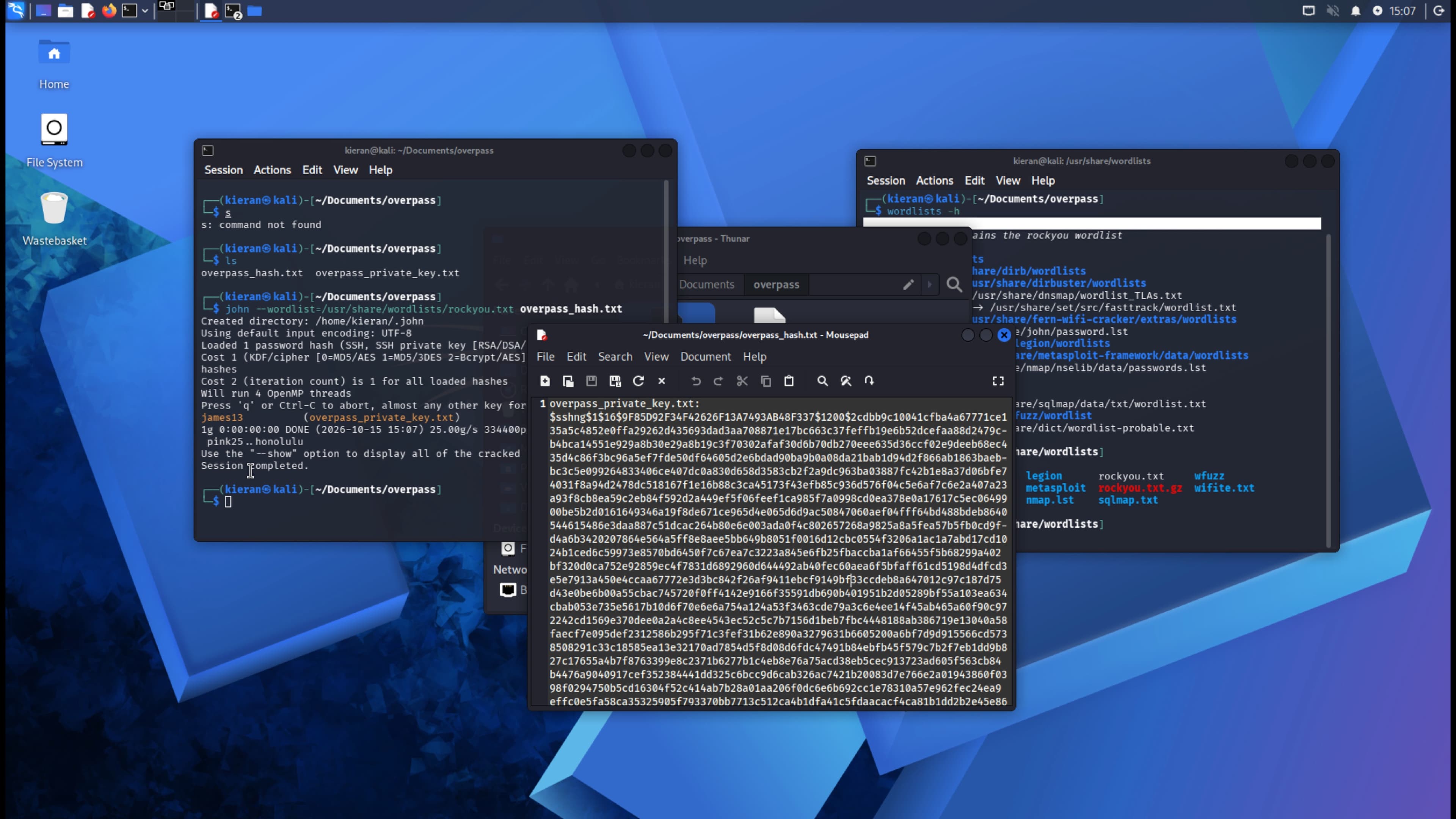
I converted the private key to a hash format John the Ripper could recognise, then cracked the passphrase:
ssh2john id_rsa > id_rsa.hash
john --wordlist=/usr/share/wordlists/rockyou.txt id_rsa.hash
This cracked the passphrase as james13.
5. Logging in Over SSH
Based on a message left in the admin page alongside the private key and passphrase, I was able to log in to the test environment over SSH using the key.
ssh -i id_rsa <username>@<target-ip>
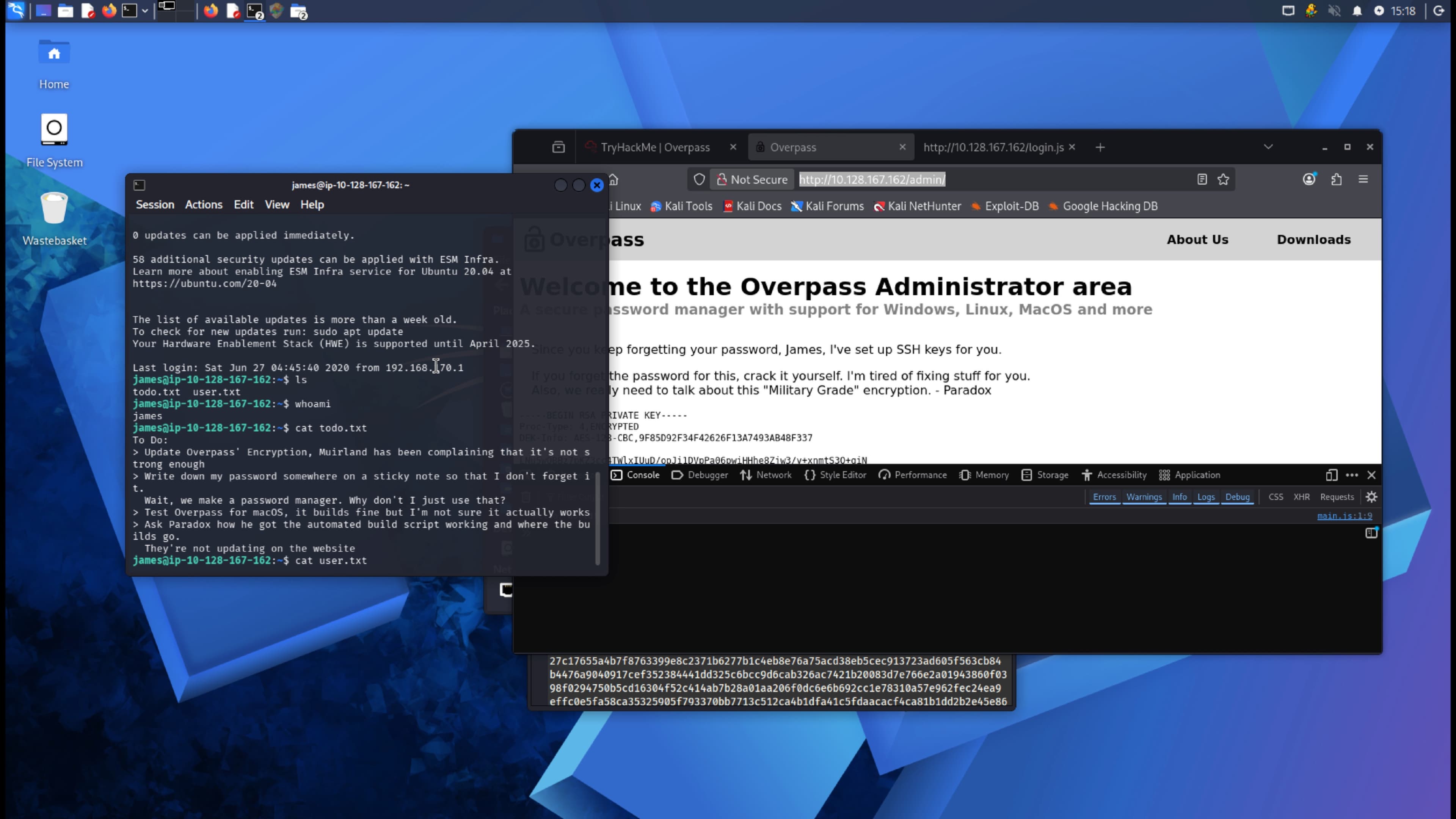
I confirmed which user I was logged in as and located the user flag, which I have hidden so people can find it themselves.
6. Privilege Escalation
I used my custom HTTP server tool, GhostGate, to stage LinPEAS, then pulled it onto the target with curl and ran it. LinPEAS flagged several possible escalation paths via kernel exploits, but for a beginner-level box that felt like overkill — a quick search confirmed there was a simpler intended route.
I listed the machine's scheduled jobs with:
cat /etc/cron.d/<job-name>
This showed a cron job pointing at a hostname I could control. I edited /etc/hosts on the target to point that hostname at my own attacking machine, then used GhostGate to serve a reverse shell payload in place of the expected build script. When the cron job next ran, it pulled and executed my payload instead, giving me a root shell and the final flag.
Flag
User Flag: [hidden]
Root Flag: [hidden]
Tools Used
- Nmap — Network scanning and service enumeration
- Gobuster — Directory brute forcing
- ssh2john / John the Ripper — Cracking the RSA key passphrase
- SSH — Remote access
- GhostGate — Staging LinPEAS and later a reverse shell payload
- LinPEAS — Privilege escalation enumeration
- cat /etc/cron.d/ — Cron job enumeration
- /etc/hosts — Hostname hijack for the cron job
Notes / Lessons Learned
- Authentication logic flaws, like a fallback path on login failure, can be just as dangerous as missing authentication entirely — always read the code, not just test the login form.
- Private keys found on a server are worth cracking even without an obvious SSH username, especially when paired with a hint elsewhere on the site.
- Automated tools like LinPEAS are great for enumeration, but the flashiest finding (a kernel exploit) isn't always the intended path — check cron jobs and file permissions first, especially on beginner boxes.
- Hijacking a cron job via a controllable hostname is a simple, reliable way to escalate when you can get a payload into its execution path.
Screenshots
1 / 7
2 / 7
3 / 7
4 / 7
5 / 7
6 / 7
7 / 7